Massachusetts DSCR Loans — Qualify on Rental Income
Finance your Massachusetts investment property based on what the property earns — not what shows up on your personal tax return. Skip the W-2s, personal tax filings, and personal debt-to-income calculations. Lenders compare the property's rent to its full monthly housing payment, and each wholesale lender sets its own minimums.

Massachusetts DSCR Loan at a Glance
A DSCR (debt service coverage ratio) loan is a non-agency (non-QM) investment property mortgage that evaluates the property's cash flow instead of your personal W-2s or tax returns. Under federal Regulation Z (12 CFR 1026.3(a)), credit extended primarily for a business or commercial purpose — or to an entity other than a natural person — is exempt from consumer Truth in Lending rules, which is why DSCR loans are underwritten differently from owner-occupied mortgages. Exact down payment, credit score, reserve, and ratio thresholds vary by wholesale lender.
| Feature | How It Works |
|---|---|
| Qualifying Income | Based on the subject property's existing lease or the appraiser's market rent schedule rather than personal employment income |
| Tax Returns & W-2s | Standard DSCR programs do not use these to compute a personal debt-to-income ratio |
| How DSCR Is Measured | Gross monthly rental income divided by the full monthly housing payment: principal, interest, property taxes, insurance, and any HOA or condo dues (PITIA) |
| Down Payment, Credit & Reserves | Set by each private non-QM investor's current guidelines based on credit profile, property type, loan purpose, LTV, and cash-flow coverage |
| Property Types | Non-owner-occupied residential properties; eligible types vary by lender and can include single-family homes, two- and three-family homes (including classic triple-deckers), 2–4 unit properties, eligible condominiums, and eligible short-term rentals |
| Occupancy Rule | Strictly for non-owner-occupied business-purpose investment properties — never for a primary residence |
| Vesting Options | Take title personally or through an eligible entity like an LLC, subject to program guidelines |
| Loan Purpose | Purchase, rate-and-term refinance, or DSCR cash-out refinance |
Why Investors Use DSCR Loans in Massachusetts
Qualify Despite Tax Write-Offs
Massachusetts imposes a flat 5% personal income tax plus a 4% surtax on taxable income above $1,107,750 for tax year 2026. Because DSCR underwriting looks at the property's rent rather than your personal tax returns, depreciation and business write-offs do not shrink your qualifying income.
Built for Two- and Three-Family Rentals
Two- and three-family homes, including triple-deckers, are staples of Massachusetts rental portfolios. DSCR programs vary on 2–4 unit guidelines, and we compare wholesale lenders to match your building type.
LLC & Portfolio Flexibility
Business-purpose DSCR loans allow experienced landlords and self-employed buyers to close in an LLC (where permitted by the lender) without hitting conventional personal debt-to-income walls as they add doors.
Long-Term & Vacation Rental Options
Whether you lease units year-round in Greater Boston or operate a compliant seasonal rental on Cape Cod, participating non-QM lenders offer DSCR options tailored to long-term leases and eligible short-term rentals.
Massachusetts Tax & Rule Realities for Rental Cash Flow
Accurate PITIA modeling is essential when underwriting a Massachusetts DSCR loan. Property taxes are set by each city and town in dollars per $1,000 of assessed value (on a July 1 to June 30 fiscal year), and under MGL Chapter 59, Section 5C, communities that adopt a local residential exemption grant it only to a taxpayer's principal residence — never to a non-owner-occupied rental. State laws on lead paint, short-term rental excises, and deed transfers also shape your numbers.
| Massachusetts Cost or Rule | Statute / Authority | Current Published Figure or Rule | Impact on DSCR Underwriting |
|---|---|---|---|
| Municipal Property Tax & Classification | Set annually by each city or town (FY runs July 1–June 30) | Boston FY2026 residential rate: $12.40 per $1,000 of assessed value (commercial/industrial/personal: $26.96 per $1,000) | Full annual tax bill is divided by 12 and included in the PITIA denominator; confirm current town rates and any Community Preservation Act surcharge |
| Local Residential Exemption | MGL c. 59, s. 5C (local option up to 35% of average residential value) | Boston FY2026 residential exemption saves eligible owner-occupants $4,353.74 (up from $3,984.21 in FY2025) | Available only for a principal residence; non-owner-occupied investment properties do not receive it, resulting in a higher tax bill in adopting communities |
| Personal Income Tax on Rents | Massachusetts Department of Revenue (DOR) | 5% flat tax on most taxable income, plus 4% surtax on taxable income over $1,107,750 in 2026 (indexed annually) | Rental income is taxable in Massachusetts, but DSCR qualifying uses gross property rent rather than net Schedule E income |
| Massachusetts Lead Law | MGL c. 111, s. 197 | Mandatory abatement or interim control if a child under six resides in premises with dangerous levels of lead | Applies to rental owners; investors buying older Massachusetts housing stock should budget for lead compliance alongside loan reserves |
| Short-Term Rental Excises & Rules | MGL c. 64G, s. 1, 3, 3A, 3C, 3D & c. 175, s. 4F | 5.7% state excise + up to 6% local (6.5% in Boston) + 2.75% Cape & Islands Water Protection Fund (where applicable) + up to 3% impact fee; $1M liability coverage required | Excises and strict municipal rules (Boston limits STRs to owner-occupied buildings) directly affect whether a property is underwritten on long-term or STR income |
| Deed Excise Tax at Closing | MGL c. 64D, s. 1 | $4.56 per $1,000 of consideration statewide ($2.28 per $500 step); $6.48 per $1,000 in Barnstable County | By Massachusetts custom the seller pays deed excise at recording, unless negotiated otherwise in the purchase and sale agreement |
Model Your Massachusetts Rental's Cash-Flow Coverage
Because non-owner-occupied Massachusetts rentals do not receive local residential exemptions under MGL c. 59, s. 5C, estimating the true municipal tax bill is critical to your DSCR ratio. Share the property address and estimated rent with our team for a side-by-side comparison across wholesale DSCR lenders.
Request a Massachusetts DSCR Property ReviewSpecialized DSCR & Investor Tools
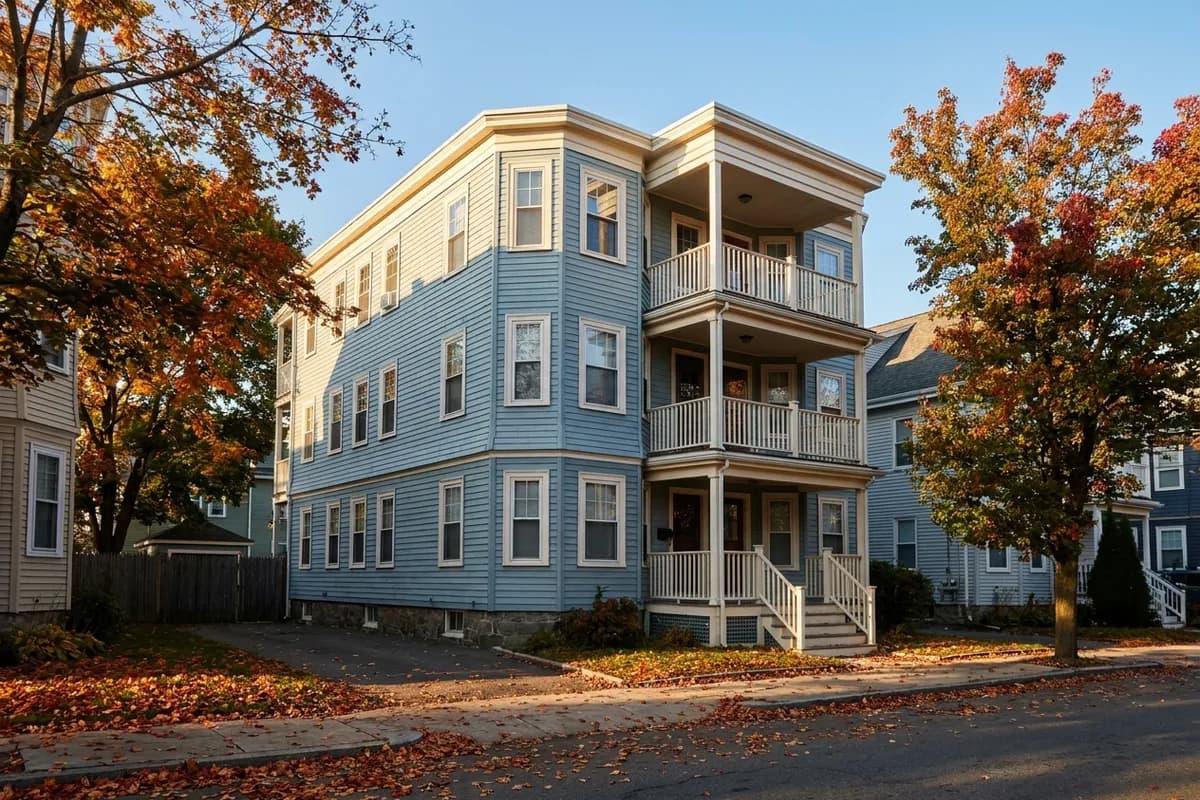
Massachusetts DSCR Loan Calculator
Estimate your debt service coverage ratio by comparing gross monthly rent against principal, interest, Massachusetts property taxes, insurance, and condo or HOA fees.
Read Guide
Short-Term Rental DSCR Loans in Massachusetts
How DSCR financing works for vacation rentals, plus Massachusetts room occupancy excises, Cape Cod water protection taxes, and Boston owner-occupancy rules.
Read Guide
Massachusetts DSCR Cash-Out Refinance
Access equity from a non-owner-occupied Massachusetts investment property to acquire your next multi-family rental or fund renovations.
Read Guide
Condo Loans in Massachusetts
Compare warrantable and non-warrantable condo financing options for Massachusetts condo units, from city buildings to small associations.
Read GuideHow to Get a Massachusetts DSCR Loan
- 1
Share the Property & Strategy
Tell us whether you are buying or refinancing a single-family, condo, or 2–4 unit triple-decker, whether you plan a long-term or short-term rental, and whether you will hold title individually or in an LLC. Starting an eligibility check takes no hard credit pull.
- 2
Estimate Full Massachusetts PITIA & Rent
We calculate the property's full non-owner-occupied municipal tax bill (without residential exemptions), hazard insurance, and any condo fees to compare against current leases or market rents across multiple wholesale DSCR lenders.
- 3
Order the Appraisal & Rent Schedule
An independent appraiser confirms the property's market value and completes a comparable rent schedule documenting the property's gross rental income potential.
- 4
Close in Your Name or Entity
Pre-approval typically takes 1–3 business days once documents are in, and purchase closings typically take 30–45 days. Once underwriting clears the appraisal, title, and LLC or individual paperwork, you close and the mortgage is recorded at the county Registry of Deeds.
DSCR vs. Conventional Investment Loans
Both DSCR and conventional agency mortgages can finance a Massachusetts rental property, but they evaluate the borrower and the building in fundamentally different ways.
| Feature | DSCR Loan | Conventional Investment Loan |
|---|---|---|
| Primary Qualification Test | Property gross rental income compared to the property's monthly PITIA payment | Personal debt-to-income ratio (DTI) of the borrower factoring in every personal and rental liability |
| Income Documentation | Appraisal rent schedule and/or existing lease documentation | Personal tax returns (including Schedule E), W-2s, pay stubs, and full income verification |
| Title & Vesting | Individual or qualifying business entity (such as an LLC), depending on lender | Typically requires closing in an individual borrower's name |
| Self-Employed Tax Write-Offs | Business and depreciation deductions on personal returns do not reduce qualifying power | Net taxable income after deductions is used to calculate qualifying DTI |
| Rental Strategy | Programs available for long-term leases and, with participating lenders, eligible short-term rentals | Underwritten primarily using traditional long-term lease standards |
| Occupancy | Non-owner-occupied business-purpose investment properties only | Can be used for primary residences, vacation homes, or rental properties |
Related Massachusetts Investor & Tax Guides

DSCR Loan Massachusetts Guide
Explore how wholesale DSCR underwriting works across Massachusetts markets, property types, and vesting structures.
Read Guide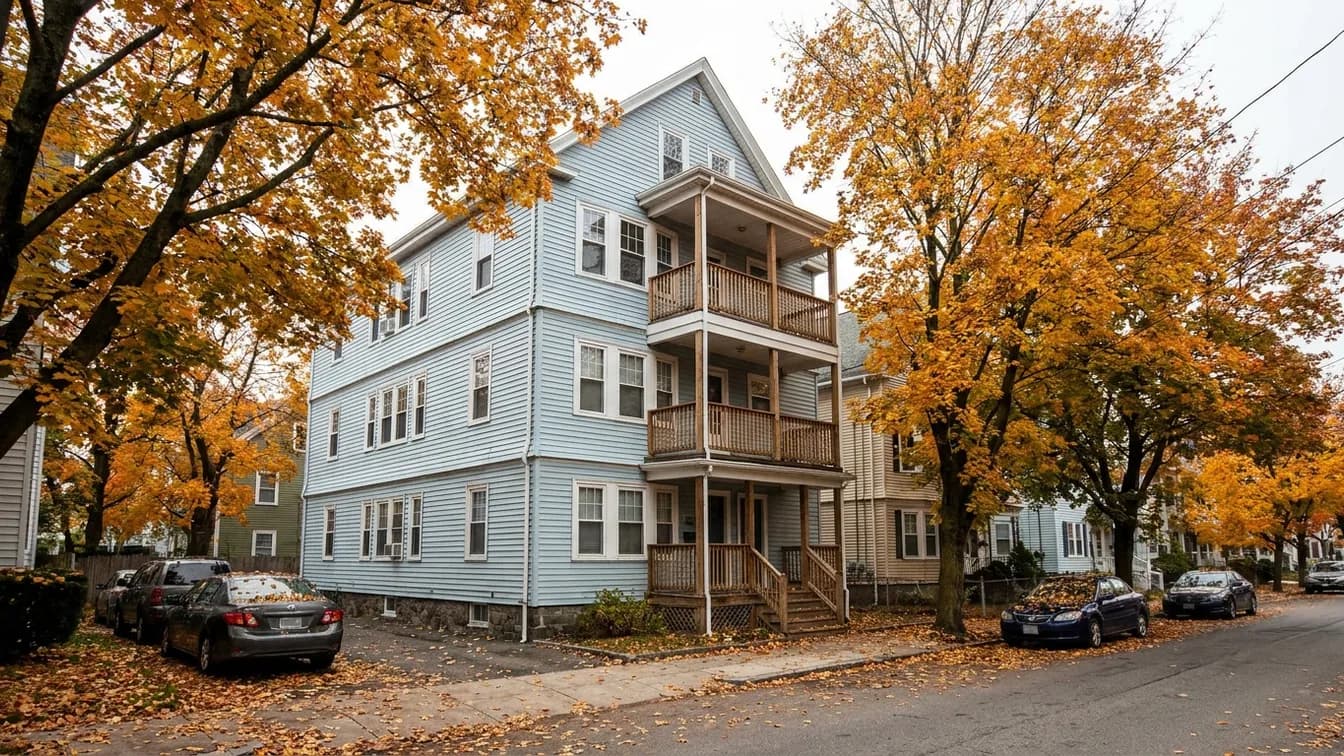
Multifamily Mortgage in Massachusetts
Compare financing paths for Massachusetts two-family, three-family triple-decker, and four-unit properties.
Read Guide
Massachusetts Property Tax Rates by Town
Understand how Massachusetts cities and towns set tax rates per $1,000 of value and how residential exemptions work.
Read Guide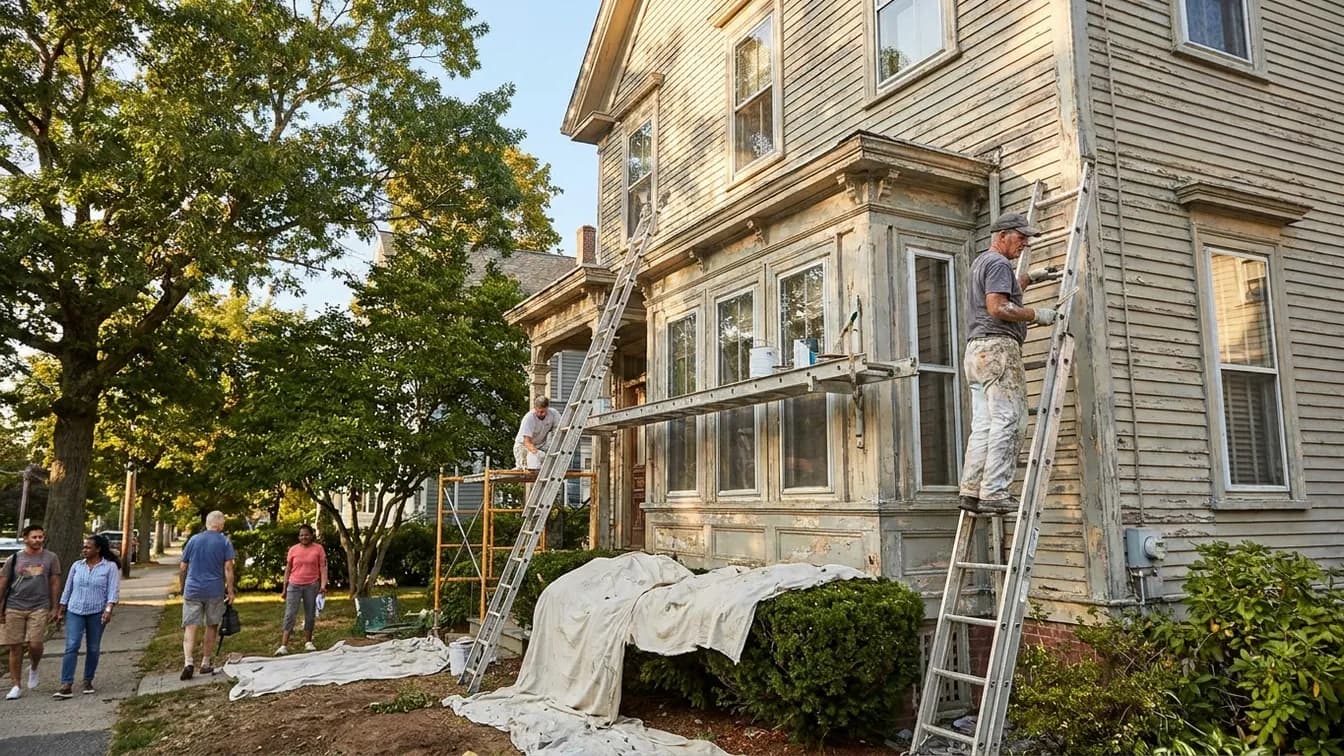
Massachusetts Lead Paint Law for Buyers & Landlords
Review MGL Chapter 111, Section 197 obligations when buying or renting older housing where a child under six resides.
Read GuideFrequently Asked Questions
Straightforward replies to the common questions we hear from Massachusetts homebuyers. Can’t find what you’re looking for?
Talk to an ExpertA DSCR (debt service coverage ratio) loan qualifies a real estate investor based on the subject property's rental income rather than personal tax returns or W-2s. The lender divides the property's gross monthly rent (from the lease or appraiser's rent schedule) by its full monthly housing payment — principal, interest, property taxes, hazard insurance, and any HOA or condo fees (PITIA). Because DSCR loans are offered by private wholesale lenders rather than a government agency, each lender sets its own minimum ratio, credit score, down payment, and reserve rules.
No. Under Massachusetts General Laws Chapter 59, Section 5C, a city or town that adopts a residential exemption (up to 35% of the average assessed value of residential parcels) grants it only to a taxpayer's principal residence. For example, in Boston for FY2026 (residential rate $12.40 per $1,000), the residential exemption saves an eligible owner-occupant $4,353.74, but a non-owner-occupied investment property does not receive it and is taxed on its full assessed value.
Yes, many wholesale DSCR programs finance non-owner-occupied 2–4 unit residential properties, including two- and three-family triple-deckers. Because eligible property types, maximum loan-to-value ratios, and reserve requirements for multi-family buildings vary by non-QM investor, our team compares multiple wholesale lenders to match your specific building.
Massachusetts taxes personal income (including rental income) at a flat 5% rate, plus a 4% surtax on taxable income above $1,107,750 in 2026. Because DSCR loans underwrite using the property's gross rent rather than your personal tax returns, large depreciation or business write-offs on your returns do not reduce your borrowing power. Investors buying older rentals must also factor in the Massachusetts Lead Law (MGL c. 111, s. 197), which requires the owner to abate or contain dangerous lead materials whenever a child under six resides in the premises.
Some wholesale DSCR lenders finance eligible short-term rentals, provided the property complies with state and local laws. In Massachusetts, short-term rentals (stays of 31 consecutive calendar days or less) are subject to a 5.7% state room occupancy excise, up to a 6% local option excise (6.5% in Boston), a 2.75% Cape Cod and Islands Water Protection Fund excise in participating towns, and up to a 3% community impact fee, plus a mandatory $1,000,000 liability insurance requirement under MGL c. 175, s. 4F. Note that the City of Boston licenses short-term rentals only in owner-occupied properties, so a non-owner-occupied Boston rental financed with a DSCR loan is generally underwritten on long-term rent.
Yes, because business-purpose credit and credit extended to an organization are exempt from federal Regulation Z under 12 CFR 1026.3(a), many DSCR lenders allow investors to vest title in a qualifying LLC or corporation. At closing, Massachusetts imposes a deed excise tax under MGL c. 64D, s. 1 of $4.56 per $1,000 of consideration statewide ($6.48 per $1,000 in Barnstable County), which by long-standing Massachusetts custom is paid by the seller unless negotiated otherwise in the purchase and sale agreement.
Find Out If a Massachusetts DSCR Loan Works for Your Next Investment Property
Share your property details and investment strategy — we will compare wholesale DSCR lenders that qualify on the property's rental income with no hard credit pull to start.