

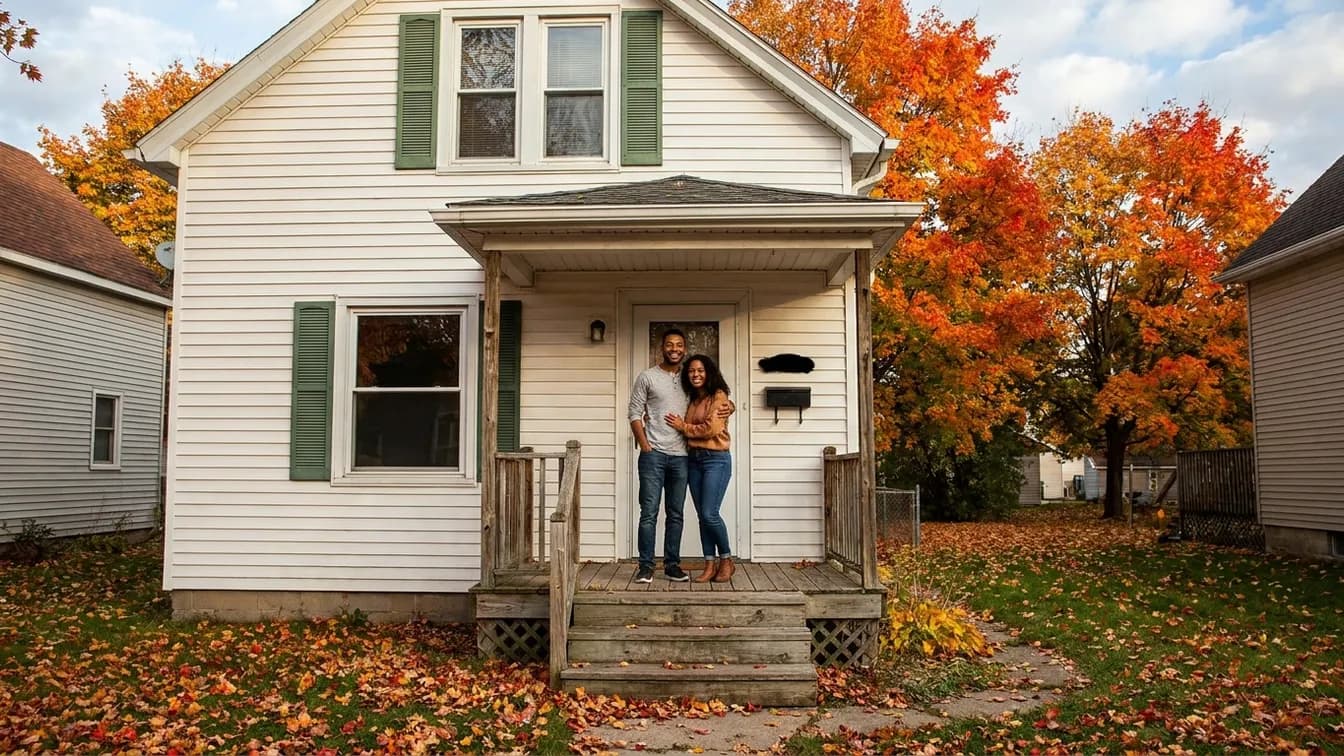
Shopping for a Massachusetts home on a modest income often means struggling to afford both the down payment and the monthly bill.
MassHousing counters this with five fixed-rate mortgages featuring tier-based income limits, reduced or zero mortgage insurance, and MI Plus job-loss protection.
Check Your Massachusetts Home Purchase Eligibility
Reviewing the strict borrower rules helps you choose the right MassHousing loan or pivot to a standard conventional or FHA option.
What Is a MassHousing Mortgage?
MassHousing offers fixed-rate conventional and FHA loans for modest-income households buying a primary residence in Massachusetts. You apply through one of more than 80 participating banks, credit unions, and mortgage companies that handle your application and closing. After closing, MassHousing buys the loan and you make your monthly payments to MassHousing.
What sets a MassHousing loan apart from a standard mortgage is pricing. Every loan carries a rate fixed for the life of the mortgage and no loan-level price adjustments (LLPAs), which are the extra pricing fees Fannie Mae and Freddie Mac normally add for lower credit scores or small down payments.
You can buy a single-family home, condominium, or 2-to-4 family property in Massachusetts. MassHousing removed purchase price caps on June 2, 2025, though standard loan limits still apply, and repeat buyers can use the HFA Preferred and HFA Advantage loans when not using down payment assistance.
The Five MassHousing Loans
MassHousing offers three conventional loans (built on Fannie Mae HFA Preferred and Freddie Mac HFA Advantage guidelines) and two FHA loans, with income tiers set against Area Median Income (AMI). A 3% down payment equals 97% loan-to-value (LTV), 5% down equals 95% LTV, and 3.5% down on FHA equals 96.5% LTV.
| Loan | Who can use it | Income limit | Minimum down payment | Mortgage insurance | Down payment assistance |
|---|---|---|---|---|---|
| Workforce Advantage 4.0 conventional | First-time buyers | Set by town and household size | 3% (1 unit), 5% (2–4 units) | Paid by MassHousing | $30,000 at 0%, required |
| Workforce Advantage 4.0 FHA | First-time buyers | Set by town and household size | 3.5% (1–4 units) | Standard FHA premiums | $30,000 at 0%, required |
| First-Time Homebuyer FHA | First-time buyers | 135% of county AMI | 3.5% (1–4 units) | Standard FHA premiums | $25,000 option |
| HFA Preferred / HFA Advantage, up to 80% AMI | First-time or repeat buyers | 80% of county AMI | 3% (1 unit), 5% (2–4 units) | Reduced coverage, plus MI Plus | $25,000 at 2% |
| HFA Preferred / HFA Advantage, above 80% AMI | First-time or repeat buyers | 135% of county AMI | 3% (1 unit), 5% (2–4 units) | Standard coverage, plus MI Plus | $25,000 at 3% |
Workforce Advantage 4.0
Workforce Advantage 4.0 is for first-time buyers within their community's income cap, and both versions must be paired with the $30,000 0% deferred down payment assistance second loan.
On the conventional version, MassHousing pays the single-premium mortgage insurance so you have no monthly MI cost, and it still includes MI Plus. On the FHA version, standard FHA upfront and monthly premiums apply, and MassHousing does not cover the upfront premium.
HFA Preferred and HFA Advantage
These two conventional loans are the most flexible option because repeat buyers can use them when not adding down payment assistance. Your income tier (up to 80% of AMI or above 80% to 135% of AMI) sets how much mortgage insurance coverage is required, covered in the mortgage insurance section below.
Only HFA Preferred and HFA Advantage offer MassHousing's purchase-and-renovation feature, which covers the purchase price and repair costs in a single loan.
First-Time Homebuyer FHA
If your credit profile fits better with FHA loans in Massachusetts and your income is above the Workforce Advantage cap, the First-Time Homebuyer FHA loan goes up to 135% of county AMI on 1-to-4 unit homes.
Which Loan Fits Your Income
Two income systems decide which loans you can use. Workforce Advantage limits count everyone who will live in the home and vary by city or town and household size, while the other loans use one countywide limit at 80% and 135% of AMI regardless of household size.
These 2026 limits apply to loans locked on or after June 15, 2026 and change yearly, so confirm current figures with a participating lender. Here is how the tiers work for a four-person first-time buyer household purchasing in Worcester or most Worcester County towns:
| Household income | Loans you can use |
|---|---|
| Up to $79,020 | Workforce Advantage 4.0 (conventional or FHA), plus any loan below |
| Up to $101,760 (80% AMI) | HFA Preferred or HFA Advantage with reduced mortgage insurance and the 2% DPA, or First-Time Homebuyer FHA |
| Up to $171,720 (135% AMI) | HFA Preferred or HFA Advantage with standard mortgage insurance and the 3% DPA, or First-Time Homebuyer FHA |
| Above $171,720 | A standard conventional or FHA loan |
In Essex, Middlesex, Norfolk, Plymouth, and Suffolk counties, the countywide limits are $124,000 at 80% of AMI and $209,250 at 135% of AMI, while the four-person Workforce Advantage limit in Boston and the Cambridge-area towns is $102,840. For the full county table and Workforce Advantage limits by community, see our MassHousing down payment assistance guide.
As a rule of thumb, MassHousing considers a home affordable when housing costs take no more than one-third of your income, which you can test with our Home Affordability Calculator.
Mortgage Insurance and MI Plus
Conventional MassHousing loans with less than 20% down are insured through MassHousing's own Mortgage Insurance Fund, which is one of the main ways a MassHousing loan can cost less each month than a standard mortgage:
- Workforce Advantage 4.0 conventional: MassHousing pays the single mortgage insurance premium directly, leaving you with no monthly mortgage insurance payment.
- HFA Preferred and HFA Advantage up to 80% AMI: You get reduced ("charter-level") mortgage insurance coverage, which generally lowers your monthly premium.
- HFA Preferred and HFA Advantage above 80% to 135% AMI: Standard mortgage insurance coverage applies.
"Required coverage" is the share of the loan that mortgage insurance protects for the lender; when less coverage is required, your monthly premium is smaller.
| Loan-to-value (LTV) | Up to 80% AMI (reduced coverage) | Above 80% to 135% AMI (standard coverage) |
|---|---|---|
| 95.01% to 97% | 18% | 35% |
| 90.01% to 95% | 16% | 30% |
| 85.01% to 90% | 12% | 25% |
| 85% and below | 6% | 12% |
MI Plus Job-Loss Protection
Every conventional loan insured by MassHousing includes MI Plus at no extra cost. If you lose your job, it helps pay principal and interest for up to six months, up to $4,000 a month for loans approved for mortgage insurance on or after July 1, 2024—up to $24,000 in total help.
Homeowners apply through MassHousing's MI Plus benefits application. FHA loans carry federal FHA mortgage insurance instead and do not include MI Plus.
Who Qualifies
Credit, occupancy, and ownership rules apply to every MassHousing loan, while the first-time buyer and education rules depend on which loan you choose.
Credit, Debt, and Cash
- Credit score: 640 minimum across all five loans, though some loan, property, and LTV combinations require up to 700, so confirm your threshold with a participating lender.
- Debt-to-income (DTI) ratio: 45% maximum, measuring the share of your gross monthly income that goes toward your new housing payment plus recurring debts.
- Your own money: No minimum on a 1-unit conventional purchase; at least 3% of your own funds on a 2-to-4 unit conventional purchase; FHA loans follow standard FHA rules.
- Reserves: Depending on your file and property type, a lender may require cash left after closing, such as two months of principal, interest, taxes, and insurance (PITI).
First-Time Buyer Rule
You must be a first-time buyer to use Workforce Advantage 4.0, First-Time Homebuyer FHA, or any MassHousing down payment assistance. That means no ownership interest in a principal residence in the three years before closing, and every borrower must meet that test.
Have your lender check your history early and compare other Massachusetts first-time buyer programs.
The Rules That Rule People Out
MassHousing applies three strict occupancy and ownership rules to every loan:
- Live there for the life of the loan: You must occupy the Massachusetts property as your primary residence for as long as you hold the mortgage.
- No other real estate at closing: You cannot own any other real property when the MassHousing loan closes, which means you cannot keep a current home as a rental or vacation property.
- No non-occupant co-borrowers or co-signers: Everyone on the loan application must live in the home, so a parent or relative who will not live there cannot co-sign to help you qualify.
Homebuyer Education and Counseling
Before closing, you must finish the required class for your loan and property type:
- Homebuyer education for all first-time buyers using a MassHousing mortgage.
- Homebuyer counseling through a MassHousing-approved agency for all Workforce Advantage 4.0 loans.
- Landlord counseling with a MassHousing-approved agency for at least one borrower signing the note when buying a 2-, 3-, or 4-family home.
Enroll early so your completion certificate is in your lender's hands well before closing.
Eligible Homes and 2026 Loan Limits
You can finance a single-family home, condominium, or 2-to-4 family home in Massachusetts as long as you live in the property as your primary residence. Conventional MassHousing loans follow conforming loan limits in Massachusetts, while FHA loans use the lower of the FHA limit or the conforming limit:
| Massachusetts counties | 2026 1-unit conforming loan limit |
|---|---|
| Most Massachusetts counties | $832,750 |
| Essex, Middlesex, Norfolk, Plymouth, and Suffolk | $962,550 |
| Dukes and Nantucket | $1,249,125 |
Buying a 2–4 Family Home
Conventional 2-to-4 unit purchases require at least 5% down and landlord counseling before closing. In addition, 75% of projected rent from the tenant units counts toward your program income, which can push a household over the county or Workforce Advantage income cap. You can compare how other loans treat rental income in our guide to multifamily mortgages in Massachusetts.
Property Condition
For rate locks on or after July 1, 2026, MassHousing will not purchase loans on homes appraised as-is with a C5 or C6 condition rating—the appraiser's lowest condition grades, with C6 worst. Homes rated C5 or C6 must be repaired to at least C4, which the purchase-and-renovation feature on HFA Preferred or HFA Advantage can finance.
Check Your Massachusetts Home Purchase Eligibility
Down Payment Assistance and the Military Credit
First-time buyers in every Massachusetts city and town can pair a MassHousing first mortgage with down payment help: $30,000 at 0% deferred interest with Workforce Advantage 4.0, or up to $25,000 amortized over 15 years at 2% or 3% with the other loans.
Because MassHousing assistance is a second mortgage rather than a grant, it is due when you sell, refinance, or pay off the first mortgage. It can also be layered with the Federal Home Loan Bank of Boston's Equity Builder Program and many local first-time buyer programs.
See our MassHousing down payment assistance guide for monthly payments, full county income tables, and repayment rules.
$2,500 Closing Cost Credit for Service Members and Veterans
Eligible active-duty service members, members of the National Guard and Reserves, veterans, and Gold Star Families may qualify for a $2,500 closing cost credit on a MassHousing loan. Ask your participating lender to verify your eligibility and combine the credit with your first mortgage.
Is a MassHousing Loan Right for You?
A MassHousing loan is strongest when your income falls under the Workforce Advantage cap (no monthly MI on the conventional version plus $30,000 at 0%) or at or below 80% of AMI (reduced MI coverage and no LLPAs). It fits best when you plan to live in the home long term.
A standard conventional or FHA loan may be the better choice if:
- You need a non-occupant co-borrower or co-signer to qualify.
- Your income is above 135% of county AMI (or projected rental income on a 2-to-4 family home pushes you over).
- You want to keep a home or other real estate you already own at closing.
- Your credit score is below 640.
If you do qualify for state-backed financing, it is also worth comparing MassHousing alongside the Massachusetts Housing Partnership's ONE Mortgage Program in Massachusetts and standard conventional and FHA loans without program overlays.
How to Apply
- Check your numbers and compare loan options: Review your credit score (640+ minimum), debt-to-income ratio (45% max), and your county or town income limit. Our team at Make Massachusetts Your Home (operated by Next Wave Mortgage, LLC) helps you check eligibility with no hard credit pull, compare conventional and FHA options across wholesale lenders, and get pre-approved, typically within 1 to 3 business days after documents are in.
- Apply through a participating lender: If MassHousing fits better, you apply through one of MassHousing's more than 80 approved banks, credit unions, or mortgage companies, which verifies the exact loan and down payment assistance tier you qualify for.
- Finish education early: Complete a MassHousing-approved homebuyer education course—plus landlord counseling if you are buying a 2-to-4 unit home—so your certificates are ready before closing.
- Lock and close on an eligible home: Once you are under contract on a Massachusetts home rated C4 or better (or using the renovation feature on HFA Preferred or HFA Advantage), your participating lender closes the loan, MassHousing buys it, and you make your monthly payments to MassHousing.
Run a quick eligibility check today and schedule a free 15-minute call with a loan officer to map out your best mortgage options.
Ready to Get Started?
Check your eligibility in under 2 minutes. No credit pull, no obligation.
Get our Massachusetts updates in your Google feed
Add Make Massachusetts Your Home as a preferred source to see our rate, grant, and program updates more often in Google Search.